

Best Coffee Beans for Beginners: A 2026 Guide
Table of Contents
- Why Starting With the Right Coffee Beans Matters
- Quick Comparison: Top Beginner-Friendly Options
- Understanding Roast Levels: Why Medium Roast Is an Approachable Starting Point
- How to Choose Coffee Beans: Reading Labels and Understanding What Matters
- The Easiest Coffee to Drink for Beginners: Blends vs. Single-Origin
- Coffee Beans for Espresso Beginners: What You Need to Know
- Freshness, Storage, and Getting Started
- Frequently Asked Questions
Last Updated: October 12, 2026
Why Starting With the Right Coffee Beans Matters
Choosing the best coffee beans for beginners shapes everything that comes after. The wrong beans make even a quality brewing method taste flat or bitter. The right ones transform your morning ritual into something worth savoring.
When you're new to coffee, the gap between grocery store beans and specialty roasts feels dramatic. Grocery beans sit on shelves for months. Their flavor fades before you even open the bag. Specialty roasted beans arrive fresher, with tasting notes you can actually detect.
The beans you choose matter more than the equipment at first. A beginner with excellent beans and a basic drip machine will taste more complexity than someone with premium gear and stale supermarket coffee.
Quick Comparison: Top Beginner-Friendly Options
| Option | Roast Level | Best For | Price | Key Tasting Notes |
|---|---|---|---|---|
| Breakfast Blend | Medium | Daily drinking, smooth & approachable | $19.99 | Walnuts, apple, toffee |
| House Blend | Medium | Balanced flavor, versatile brewing | $19.99 | Nutty, chocolate, citrus |
| Brazil Santos | Medium | Smooth, forgiving cup | $19.99 | Cocoa, elegant, smooth |
| Peru | Medium | Bright, balanced profile | $19.99 | Salted caramel, citrus |
| Best Sellers Sample Pack | Mixed | Explore multiple roasts at once | $24.99 | Variety across 6 coffees |
The sample packs let you try multiple roasts without committing to a full bag. This is the smart move if you haven't figured out your preference yet.

Understanding Roast Levels: Why Medium Roast Is an Approachable Starting Point
A medium roast sits in the middle ground between light and dark. It's the easiest coffee to drink for beginners because it balances acidity and body without requiring much adjustment to your palate.
Light roasts preserve more of the bean's origin character. They taste brighter and more complex, but they also taste sharper. If you're not used to coffee's natural acidity, a light roast can feel sour or thin.
Medium roast splits the difference. The roasting process develops enough flavor that the coffee tastes smooth and balanced. Origin character still comes through, but it's not as demanding on your palate.
Our Breakfast Blend and House Blend both use medium roasts for this reason. They're forgiving. They work with most brewing methods. They taste good even if your technique isn't perfect yet.

How to Choose Coffee Beans: Reading Labels and Understanding What Matters
When you pick up a bag of coffee, the label tells you everything you need to know.
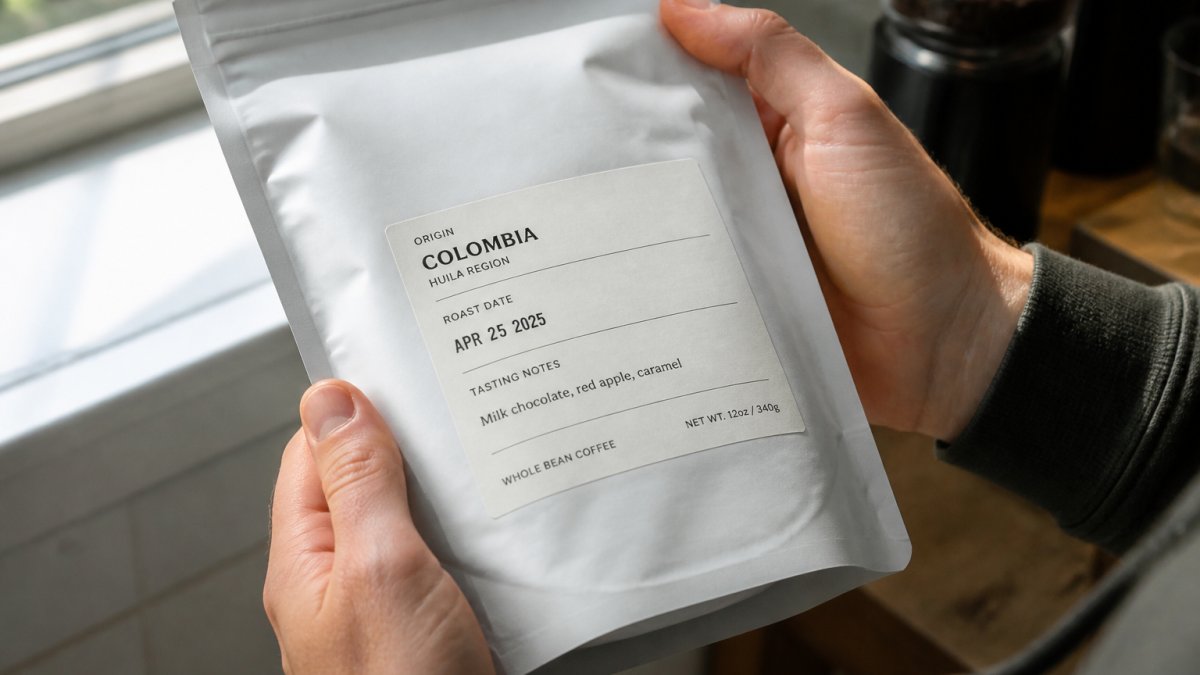
Roast date is the most important detail. Coffee stays fresh for about two weeks after roasting. After a month, it starts to fade.
Origin tells you where the beans grew. Single-origin coffees come from one region or farm. Blends mix beans from multiple places.
Tasting notes describe what you might taste. "Chocolate," "caramel," and "citrus" are common. These aren't added flavors. They're natural compounds in the bean that emerge during roasting.
Roast level should be clearly marked: light, medium, or dark. Medium roast is your safest bet as a beginner.
Processing method explains how the bean was prepared after harvest. Washed coffees taste cleaner. Natural process coffees taste fruitier. This affects flavor more than most people realize.
The Easiest Coffee to Drink for Beginners: Blends vs. Single-Origin
Blends and single-origin coffees serve different purposes. Understanding the difference helps you choose what fits your situation.
Blends mix beans from multiple origins. A skilled roaster balances them so the result is smooth, consistent, and forgiving. Blends are designed to work well across different brewing methods and water qualities.
Single-origin coffees come from one region or farm. They showcase the unique characteristics of that place: the altitude, the soil, the climate. A single-origin Peru tastes different from a single-origin Colombia. These differences are the whole point. Single-origin beans reward better technique and better equipment because they have more to reveal.
Best Sellers Sample Pack: 6Bean, Cowboy, Breakfast, Peru, Mexico, Bali →
For a true beginner, a blend is the safer starting point. It's more forgiving and it tastes good right away. Our Single Origin Favorites Sample Pack lets you explore six different origins in small 2oz portions.

Coffee Beans for Espresso Beginners: What You Need to Know
Espresso is a brewing method, not a bean type. Any coffee can be brewed as espresso, but not every coffee tastes good that way. The pressure and speed of espresso extraction amplify certain characteristics and mute others. For beginners, the goal is to choose beans that are forgiving and produce a balanced shot even when your technique is still developing.
What to look for in espresso beans:
- Roast level: Medium to medium-dark roasts are the most forgiving for beginners. They offer enough development to avoid the sourness of under-extracted light roasts and enough origin character to avoid the ashiness of very dark roasts. Light roasts can work but demand precise grind and temperature control.
- Origin: Brazilian and Colombian beans are common in beginner-friendly espresso blends because they bring nutty, chocolatey, and caramel notes that pair well with milk and are easy to extract. Single-origin Ethiopians or Kenyans can be rewarding but are less forgiving due to their bright acidity.
- Processing: Washed beans tend to produce cleaner, more predictable shots. Natural process beans can add fruity complexity but may clog espresso machines if not rested long enough after roasting.
- Freshness: Espresso needs freshly roasted beans, ideally 5-14 days off roast. Beans that are too fresh (under 4 days) can produce excessive crema and gushing, while beans older than 3-4 weeks lose crema and taste flat.
Matching beans to your espresso setup:
- Entry-level machines (e.g., De'Longhi Stilosa, Breville Bambino): These machines often have pressurized portafilters, which are more forgiving of grind inconsistency. A medium-dark blend with chocolate and nut notes works well here. Avoid very light roasts; they can taste sour.
- Mid-range machines with non-pressurized baskets (e.g., Gaggia Classic Pro, Rancilio Silvia): You'll need a quality grinder and fresh beans. A medium roast blend with balanced acidity and sweetness is a good starting point. Brazilian or Colombian beans are reliable.
- Manual espresso makers (e.g., Flair, Cafelat Robot): These reward lighter roasts but require precise control. Start with a medium roast to learn the variables before moving to light roasts.
Beginner troubleshooting for espresso:
- Shot tastes bitter or ashy: Likely over-extracted. Grind coarser or lower the brew temperature slightly.
- Shot tastes sour or salty: Likely under-extracted. Grind finer or increase the dose.
- Shot runs too fast (under 20 seconds): Grind finer or increase dose.
- Shot runs too slow (over 35 seconds): Grind coarser or decrease dose.
- No crema: Beans are likely stale. Check the roast date.
A note on "espresso" labels: Many bags are labeled "espresso roast" or "espresso blend." This is marketing, not a legal category. Any fresh bean can be used for espresso. What matters is how the bean responds to your machine and your skill level. Start with a blend designed for espresso, like our 6Bean Blend, which is balanced for easy dialing-in. Once you can consistently pull a good shot, experiment with single-origin beans to explore different flavor profiles.
Freshness, Storage, and Getting Started
Freshness is the single biggest factor in how good your coffee tastes. A fresh bean from a good roaster will outperform an old bean from anywhere, no matter how fancy your equipment. But freshness is only part of the story. How you store your beans and how you respond to a bad cup also matter.
How to read a coffee bag label like a pro:
- Roast date: This is the most important number on the bag. Coffee is at its peak flavor 4-14 days after roasting. After 3-4 weeks, it starts to fade. If the bag only shows a "best by" date, assume the coffee is older than you'd like. Roasted-to-order coffee, like ours, ships within days of roasting.
- Origin: Single-origin means the beans come from one region or farm. Blends mix beans from multiple origins. Single-origin beans have more distinct flavors, which makes them great for learning. Blends are designed for consistency and balance, which makes them forgiving for beginners.
- Tasting notes: These describe the flavors you might taste, such as chocolate, caramel, or citrus. They are not added flavors; they are natural compounds in the bean. Use them as a guide, not a guarantee.
- Roast level: Light, medium, or dark. Medium is the safest starting point for beginners.
- Processing method: Washed, natural, honey, etc. Washed coffees taste cleaner; natural coffees taste fruitier. This affects flavor more than most people realize.
- Whole bean vs. pre-ground: Whole beans stay fresh longer. If you buy pre-ground, choose a bag with a roast date and use it within a week.
Storage that actually works:
- Keep beans in an airtight container away from light and heat. A sealed bag with a one-way valve works fine for short-term storage. A ceramic or stainless steel container with a tight seal works better.
- Do not store beans in the fridge. Moisture and odors will ruin them.
- The freezer is controversial. For long-term storage (more than a month), you can freeze beans in an airtight container, but you must let them thaw completely before grinding. For most beginners, buying smaller bags more often is simpler and yields better results.
- Grind right before brewing. Ground coffee oxidizes quickly and loses flavor within hours. If you grind the night before, you'll notice a flatter cup.
Beginner troubleshooting: adjusting taste without changing beans:
- Coffee tastes bitter: Over-extracted. Try a coarser grind, lower water temperature (195-200°F instead of boiling), or shorter brew time.
- Coffee tastes sour or weak: Under-extracted. Try a finer grind, higher water temperature, or longer brew time.
- Coffee tastes weak but not sour: Increase the coffee-to-water ratio. Start with 1:15 (one gram coffee to 15 grams water) and adjust to taste.
- Coffee tastes too intense: Decrease the coffee-to-water ratio or dilute with a little hot water.
- Coffee tastes flat or stale: Check the roast date. If it's more than a month old, it's likely past its prime.
Getting started:
When you're ready to begin, the Best Sellers Sample Pack or Single Origin Favorites Sample Pack are your entry point. Six 2oz portions let you try different roasts and origins without overwhelming yourself. You'll figure out what you like without spending much money. Once you find a bean you love, order a full bag. Our roasted-to-order process means it arrives fresh.
Learn more about coffee freshness and storage
Frequently Asked Questions
What is the easiest coffee to drink for a beginner?
Medium roast blends are the easiest entry point for beginners. They're naturally balanced, smooth, and forgiving with brewing. Look for blends labeled 'house blend' or 'breakfast blend', these combine beans from multiple origins to create a consistent, approachable flavor. They're less likely to taste bitter or sour if your brewing isn't perfect, making them ideal for learning.
Should beginners start with light, medium, or dark roast coffee?
Medium roast is your best starting point. Light roasts highlight origin flavors and acidity, which can taste sharp if you're not used to it. Dark roasts are bold but can mask brewing mistakes. Medium roast offers balance: enough body to feel satisfying, enough clarity to taste the origin, and enough forgiveness for imperfect brewing. Most beginner-friendly beans are medium roasted.
How do I choose coffee beans for my brewing method?
Your brewing method determines grind size, which affects which beans work best. Espresso machines need dense, finely ground beans that extract quickly, look for beans labeled for espresso or try darker, more forgiving roasts. Drip coffee and pour-overs work with most beans; medium roasts are versatile here. French press handles coarser grinds well and pairs nicely with fuller-bodied, medium or dark roasts. Check the bag for brewing recommendations.
Are Arabica coffee beans better for beginners?
Arabica beans are generally smoother and more balanced than Robusta, making them better for beginners. They have more subtle flavor notes and less harsh bitterness. Most specialty coffee, including beginner-friendly options, is Arabica. Robusta has more caffeine and a sharper taste, which can be overwhelming if you're learning to appreciate coffee flavor. Start with Arabica single-origins or blends.
How fresh should coffee beans be when I buy them?
Buy beans roasted within the last 1-2 weeks. Check the roast date on the bag, it's your best guide to freshness. Beans peak 5-10 days after roasting and stay good for 3-4 weeks if stored properly in an airtight container away from light and heat. Stale beans taste flat and dull. Roasted-to-order options ensure maximum freshness, which is especially helpful when you're learning to taste quality differences.