

Buy Freshly Roasted Coffee Online: A Guide
Table of Contents
- Why Freshly Roasted Coffee Online Makes a Real Difference
- How to Verify Coffee Roast Date and Freshness When Ordering
- Choosing Whole Bean Coffee Online by Brew Method and Taste
- How to Store Coffee Beans for Maximum Freshness
- Coffee Subscriptions: Convenience and Consistency
- What to Expect When You Buy Freshly Roasted Coffee Online
- Frequently Asked Questions
Last Updated: October 11, 2026
Why Freshly Roasted Coffee Online Makes a Real Difference
Freshly roasted coffee online delivers vibrant, complex flavor compared to stale grocery-store beans. When you buy freshly roasted coffee online, you're getting beans roasted days ago, not months. At ASE', we roast to order because freshness transforms flavor. Coffee begins oxidizing immediately after roasting; within two weeks, subtle notes fade, and within a month, it tastes dull.
Online retailers who roast to order, like ASE', send beans within days of roasting so you taste what the roaster intended. Aromatic compounds that make coffee interesting are volatile and fade quickly; fresh beans retain them, stale ones don't.
How to Verify Coffee Roast Date and Freshness When Ordering
The roast date is everything when you buy freshly roasted coffee online. Any reputable roaster prints it on the bag; if you don't see one, that's a red flag. The date tells you exactly how fresh your coffee is when it arrives.
Look for a specific date, not vague language like "fresh roasted." ASE' includes the roast date on every bag because transparency matters.
The Freshness Math: Roast Date + Shipping Time
The roast date alone doesn't equal freshness at your door; you must account for shipping time.
Calculate actual freshness this way:
- Note the roast date on the bag.
- Check when the roaster ships (most ship within 1-2 business days of roasting).
- Add typical delivery time for your region (3-5 days for most US addresses; 5-10 days for international).
- The sum is how old your beans will be when they arrive.
Example: If coffee is roasted October 8, ships October 9, and arrives October 13, your beans are 5 days old, ideal and within the 10-day freshness window. Red flag: If roasted October 1 and received October 15, beans are 14 days old and flavor has declined. Reputable roasters minimize this gap by roasting to order and shipping fast.
What to Look for in Packaging
Quality roasters use bags with one-way valves that let gases escape without letting oxygen in. The bag should feel slightly puffy when it arrives (CO2 from roasting); a flat bag suggests age or poor packaging. The seal should be intact with no damage; a missing valve or puncture means oxygen has compromised freshness.
Roast-to-Order Claims: What They Really Mean
Many online roasters advertise "roast-to-order" or "made fresh," but these unregulated terms vary widely in meaning.
True roast-to-order: The roaster roasts your specific order after you place it, then ships immediately.
Roast-to-order with inventory: The roaster roasts in batches based on anticipated demand, then ships from stock. Beans may be 3-7 days old when shipped. Still fresh, but not as fresh as made-after-order.
"Fresh roasted" without a date: Vague marketing language. Could mean roasted last week or last month. Avoid unless a roast date is printed on the bag.
Ask roasters: "When is this coffee roasted relative to my order?" and "What is your typical ship date after roasting?" Their answers reveal whether they prioritize freshness or just use marketing language.
Choosing Whole Bean Coffee Online by Brew Method and Taste
Whole bean coffee online preserves aromatic oils and flavor compounds that disappear within minutes of grinding. Different brew methods require different grind sizes: French press needs coarse (4-minute steep), espresso needs fine (pressure extraction), pour-over needs medium-fine.
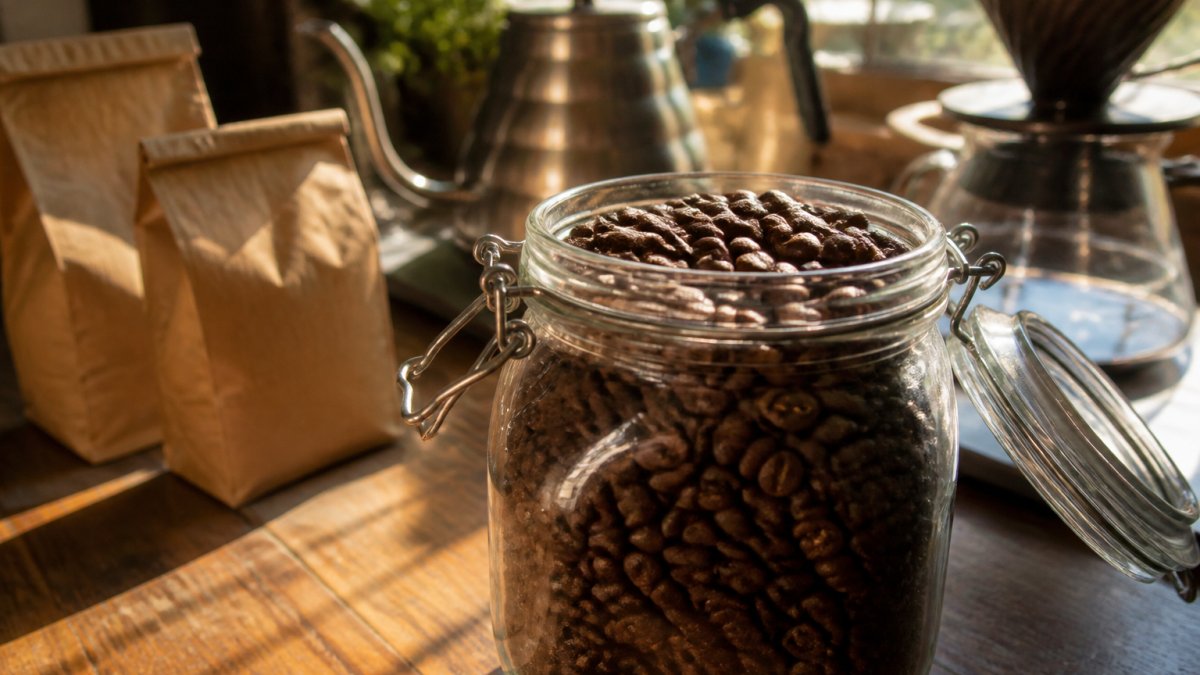
Identify your brewing method, then choose beans by roast level and tasting profile. A medium roast from Peru with notes of salted caramel, citrus, and silky sweetness works beautifully in pour-over or drip. For espresso, choose the 6Bean Blend or Cowboy Blend, designed for pressure-based extraction.

Single-Origin vs. Blends: What to Choose
Single-origin coffee comes from one region, farm, or cooperative and lets you taste how geography shapes flavor. Blends combine multiple origins for balance and consistency. Blends are ideal if you want consistency or are exploring without committing to a single origin; they're also more forgiving if your brewing technique isn't perfect.
Roast Levels and Their Impact on Flavor
Light roasts preserve origin characteristics with higher acidity and brighter notes. Medium roasts balance origin character with roast-developed flavors and are most versatile. Dark roasts emphasize roasted flavors with bold, smoky, chocolatey notes and lower acidity; they're excellent for espresso because intensity cuts through milk.
How to Store Coffee Beans for Maximum Freshness
Coffee's enemies are air, light, heat, and moisture. Protect against all four and beans stay vibrant for 3-4 weeks. Keep beans in an airtight container away from direct sunlight at room temperature. The original bag with a one-way valve is ideal storage; once opened, transfer to an airtight container with minimal headspace.
Coffee Subscriptions: Convenience and Consistency
Coffee subscriptions solve the "running out" problem while ensuring you always have fresh beans. When you subscribe, fresh coffee arrives on a schedule you choose. Most subscriptions offer monthly delivery, though some allow bi-weekly or quarterly options.
The real advantage is consistency. You receive the same fresh beans regularly without thinking about reordering. Many roasters, including ASE', offer subscription flexibility. You choose which coffees you want, how often they arrive, and you can pause or change your selection anytime.
Subscriptions typically offer modest discounts compared to one-time purchases. The math works if you're already buying regularly. If you're inconsistent or still exploring what you like, sample packs make more sense initially.
What to Expect When You Buy Freshly Roasted Coffee Online
Ordering freshly roasted coffee online is straightforward, but first-time buyers often have questions about timing, cost, and how to start. Here's what to expect and how to make your first purchase confidently.
Step 1: Decide Your Budget and Quantity
Freshly roasted coffee online typically costs more per pound than grocery-store coffee, but the flavor difference justifies the premium for most specialty coffee drinkers.
Bag sizes vary:
Single Origin Favorites Sample Pack →
- 2-ounce portions (sample packs): $3-$6 per bag. Ideal for trying multiple origins without commitment.
- Half-pound bags: $6-$10. Good for testing a single origin before committing to a full pound.
- 1-pound bags: $12-$18. The standard size; most roasters offer this.
- 2-pound or bulk bags: $20-$35. Better per-pound value if you drink coffee daily.
If you're new to buying online, start with a sample pack or half-pound bag. ASE''s Single Origin Favorites Sample Pack includes six different single-origin coffees in 2-ounce portions. This approach lets you explore without committing to full bags. The Best Sellers Sample Pack includes house blends and popular single-origins, giving you a range of roast levels and flavor profiles.

Step 2: Check Shipping Costs and Minimums
Shipping freshly roasted coffee costs more than shipping other goods because speed matters.
If you're ordering a single pound, you'll likely pay shipping. If you're ordering multiple bags or subscribing, shipping may be free or reduced.
Budget tip: If you order monthly, a subscription often includes free or discounted shipping, which can offset the cost of faster delivery and ensure your beans arrive at peak freshness.
Step 3: Choose Your First Coffee
If you already know your brewing method and taste preference, choose accordingly. If you're unsure, follow this framework:
For drip coffee or pour-over: Start with a medium roast from a single origin with balanced acidity and sweetness. Peru, Colombia, and Ethiopia are reliable choices. Medium roasts are forgiving and showcase origin character without overwhelming bitterness.
For French press: Choose a medium or dark roast with body and sweetness. French press extracts oils that make coffee taste heavier, so a darker roast or a blend designed for immersion brewing works well.
For espresso: Start with a dark roast or a blend labeled "espresso blend." These are designed for pressure-based extraction and cut through milk if you're making lattes or cappuccinos.
If you're unsure: Choose a sample pack. It's the lowest-risk way to discover what you like.
Step 4: Place Your Order and Plan Timing
Ordering freshly roasted coffee online requires slightly different timing than ordering other products.
Shipping takes time. Most roasters ship within 1-2 business days of roasting, and delivery typically takes 3-5 days depending on your location. Plan accordingly; don't expect coffee to arrive the next day.
Account for degassing. When your package arrives, the beans are still releasing CO2 from the roasting process. Wait 3-5 days before brewing. This "resting period" actually improves extraction and flavor clarity. If you brew too soon, the coffee may taste flat or sour.
Total timeline: From order to first cup is typically 10-14 days. If you need coffee sooner, choose expedited shipping or order from a local roaster if available.
Step 5: Inspect Your Delivery
When your package arrives, open it immediately and check:
- Roast date: Verify it's printed on the bag and no more than 10 days old (accounting for shipping time).
- Packaging: The bag should have a one-way valve and be sealed properly. It should feel slightly puffy from CO2, not completely flat.
- Aroma: The beans should smell vibrant and complex, fruity, chocolatey, floral, or nutty depending on the origin. A flat or stale smell suggests age or poor storage.
- Beans themselves: They should look evenly roasted with a consistent color (light, medium, or dark depending on roast level). No visible defects or unroasted beans.
If anything seems off, reputable roasters offer guarantees. Contact them immediately with photos if needed.
Step 6: Brew and Adjust
Freshly roasted coffee requires slightly different brewing than what you might be used to. The beans are degassing, the flavors are more delicate, and your technique matters more.
Invest in a burr grinder if you don't have one. Blade grinders create inconsistent particle size, which ruins extraction with fresh, high-quality beans.
Use filtered water. Tap water minerals and chlorine mask subtle flavors. A simple pitcher filter or whole-home system makes a difference.
Measure by weight, not volume. A scale ($15-$30) ensures consistency. The standard ratio is 1:16 coffee to water by weight (e.g., 20 grams of coffee to 320 grams of water).
Brew temperature and time matter. For drip, aim for 195-205°F water temperature. For French press, use 200°F water and steep for 4 minutes. For pour-over, follow your brewer's instructions but stay in the 195-205°F range.
Frequently Asked Questions
How do I know if coffee beans are freshly roasted when buying online?
Look for a roast date printed on the bag, not a best-by date. Freshly roasted coffee should show a roast date within the past two weeks. When you buy freshly roasted coffee online from roasters who roast to order, the beans are typically roasted within 48 hours of shipping. Check the product description for this commitment. Whole bean coffee should smell vibrant and aromatic when opened; stale beans smell flat or musty.
How long do freshly roasted coffee beans stay fresh?
Freshly roasted beans peak in flavor for about two to four weeks after roasting. They remain drinkable for longer, but quality declines as they age. Whole bean coffee retains freshness better than ground coffee because the larger surface area is exposed to air more slowly. Store your beans in an airtight container away from heat and light to extend their window of optimal flavor.
Are coffee subscriptions worth it for freshly roasted beans?
Yes, if you drink coffee regularly. Coffee subscriptions ensure you always have freshly roasted beans delivered on a schedule that matches your consumption. You avoid the risk of buying stale beans from shelves, and many roasters offer subscription discounts. The convenience of automatic delivery means you're never without fresh coffee, and you can adjust frequency or pause anytime based on your needs.
What's the difference between roast-to-order and pre-roasted coffee?
Roast-to-order coffee is roasted after you place your order, guaranteeing maximum freshness, often roasted within 48 hours of shipping. Pre-roasted coffee sits in warehouses or on shelves, losing flavor and aroma over time. While pre-roasted may cost less, roast-to-order delivers a noticeably bolder, more vibrant cup. For coffee enthusiasts who value flavor, the freshness difference justifies the choice.