

Is Subscription Coffee Worth the Cost? 2026 Review
Table of Contents
- Is Subscription Coffee Worth the Cost? The Real Math
- Do Coffee Subscriptions Save Money? What the Numbers Show
- Coffee Subscription vs Buying Beans: Which Fits Your Routine?
- Coffee Subscription Pros and Cons: An Honest Breakdown
- How to Choose a Coffee Subscription That Matches Your Taste
- Freshness, Waste, and the Roasted-to-Order Difference
- Verdict: Who Gets the Most Value From Subscription Coffee
- Frequently Asked Questions
Last Updated: October 14, 2026
Is Subscription Coffee Worth the Cost? The Real Math
Whether subscription coffee is worth the cost depends on how much you drink and what you pay per cup.
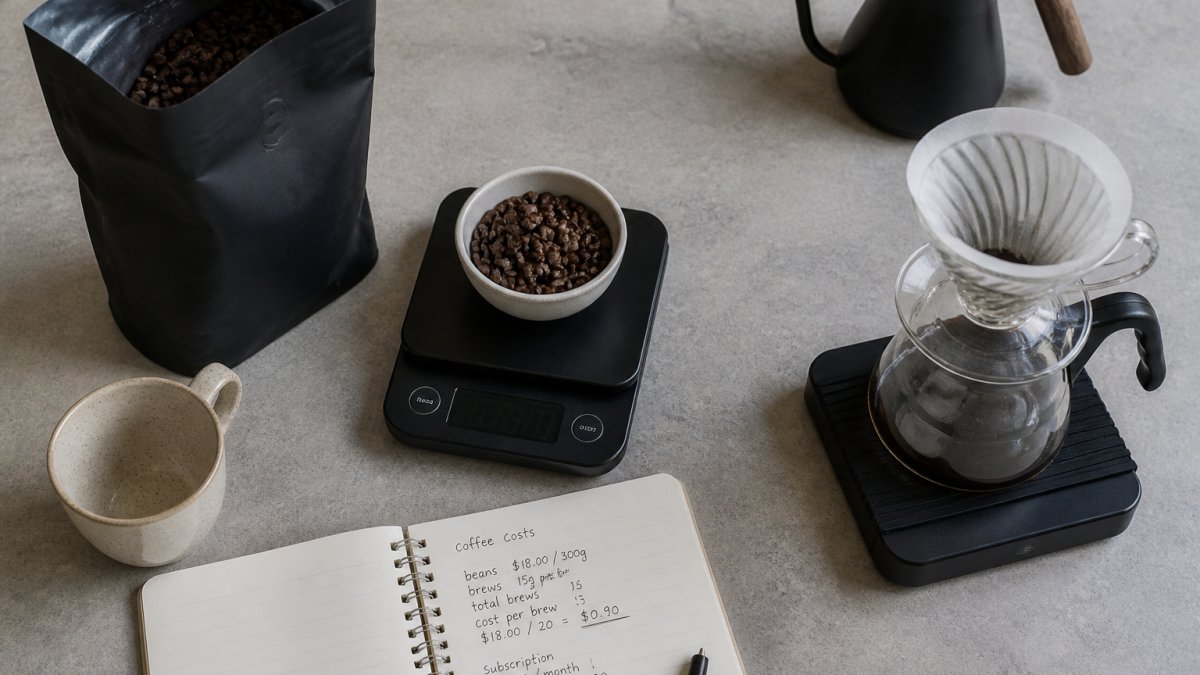
Here is the part most cost comparisons skip: a stale bag wastes more money than a fresh one costs. According to research on coffee freshness and storage from the UC Davis Coffee Center, roasted coffee begins losing its best flavor within weeks of the roast date, not months.
(/products/single-origin-favorites-sample-pack) at $24.99 let you test several roasts before committing to a full-size bag.Break-Even Points by Consumption Level
Break-even is the point where a subscription's freshness and convenience offset the price gap versus your current habit:
| Consumption Level | Cups Per Week | Subscription Makes Sense? | Why |
|---|---|---|---|
| Light | 1-4 | Rarely | Bag goes stale before you finish it |
| Moderate | 5-10 | Sometimes | Works if you choose smaller bag sizes |
| Regular | 11-20 | Usually | Freshness and cost per cup align |
| Heavy | 21+ | Almost always | Volume and freshness both favor it |
The pattern is consistent: the more you drink, the more a subscription earns its place. Brew one cup on weekends and it is a freshness problem waiting to happen.
Do Coffee Subscriptions Save Money? What the Numbers Show
Coffee subscriptions save money for some drinkers and cost more for others. The only way to know which group you are in is to run the arithmetic.
The cost-per-cup formula
Cost per cup = (bag price + shipping) ÷ cups per bag.
Cups per bag depends on your dose and brew method. At a common 18-gram dose for pour-over or drip, a 12-ounce (340g) bag yields roughly 18 to 19 cups, and a 200g bag about 11. Worked example:
- 12-ounce bag at $20, free shipping, 18g dose → $20 ÷ 18 cups ≈ $1.11 per cup
- 12-ounce bag at $20 plus $5 shipping → $25 ÷ 18 cups ≈ $1.39 per cup
- Supermarket 12-ounce bag at $9 → $9 ÷ 18 cups = $0.50 per cup
The gap between subscription and supermarket is real, but usually smaller than the gap between subscription and café, the comparison that decides the answer for most households.
Break-even against your current habit
Break-even is where a subscription's freshness, convenience, and consistency offset the price gap versus what you already drink.
- Against café coffee: a subscription almost always wins. Replacing even three café cups a week at $3 each saves roughly $9 per week, which covers most subscription plans on its own.
- Against supermarket coffee: a subscription usually costs more per cup. The break-even is whether you finish the bag before it goes stale and whether you value roast-date transparency.
- Against a local roaster: the gap is often shipping. If your roaster is nearby and sells fresh beans at a similar price, a subscription mainly buys convenience, not savings.
Where the savings actually come from
Three mechanisms drive subscription value:
- Matched bag size. A bag you finish in two weeks eliminates the flat tail end of a large bag, a hidden cost in every oversized purchase.
- Replaced café visits. A subscription that supports home brewing redirects spending from $3 cups to roughly $1 cups.
- Prepayment and loyalty discounts. Many services offer a lower per-bag rate when you prepay or commit to a longer plan. Read the terms: prepaid plans often trade a discount for reduced flexibility.
Where subscriptions do not save money
- Light drinkers who cannot finish a bag before it fades
- Impulse buyers who already have a trusted local source at a similar price
- Anyone paying shipping on infrequent, small orders, where the fee can exceed the per-bag difference
The honest framing: a subscription is a value play for committed home brewers, not a discount program for everyone. Run your own cost per cup.
Coffee Subscription vs Buying Beans: Which Fits Your Routine?
Coffee subscription versus buying beans comes down to one question: do you want to think about restocking, or would you rather it happen automatically?
Buying beans gives you total control: roast, origin, timing, quantity. The trade-off is remembering to restock and being near a good source.
Here is how we would frame the decision:
- Choose buying beans if you enjoy the ritual of shopping, brew irregularly, or have a local roaster you trust.
- Choose a subscription if you brew daily, value consistency, and would rather not think about restocking.
- Choose both if you want a reliable base supply plus room to experiment.
Neither is objectively better. The right answer depends on your routine, not on which model sounds more premium.
Coffee Subscription Pros and Cons: An Honest Breakdown
The pros of a coffee subscription center on freshness, convenience, and discovery; the cons on total cost, commitment, and paying for coffee you do not finish. Here is the honest breakdown, including terms most reviews leave out.
The genuine upsides
- Freshness. Beans roasted to order arrive closer to their roast date, and flavor fades within weeks, not months.
- Convenience. Automatic delivery removes the restocking chore and the emergency grocery run.
- Discovery. Rotating selections expose you to origins and roasts you would not pick yourself.
The honest downsides
- Shipping can erase per-bag savings. A $5 fee on a $20 bag is a 25% markup. Order infrequently and the fee can outweigh any discount.
- Minimum commitments and prepaid plans. Some services require a minimum number of deliveries or a multi-month prepay for a lower rate, often reducing flexibility in exchange.
- Price changes. Subscription pricing can change, and the terms you signed up under may not be the terms you keep. Check whether your rate is locked or adjustable.
The full-cost checklist before you subscribe
Before you commit, confirm these five items in writing:
- Shipping cost and threshold. Is shipping free above a certain order size, or is it always added?
- Minimum commitment. Is there a required number of deliveries before you can cancel?
- Prepaid terms. If you prepay for a discount, what happens if you cancel early? Are refunds prorated?
- Pause and skip policy. Can you pause or skip a delivery without penalty, and how far in advance?
- Price-change policy. Does your rate stay fixed, or can it change mid-subscription?
What most reviews miss
The value of a subscription is not the coffee alone but the removal of a recurring decision. For busy households, that convenience can be worth more than the per-bag difference, but only if the cadence matches your drinking. A subscription you cannot keep up with is a recurring reminder that you are wasting money.
Single Origin Favorites Sample Pack →
How to Choose a Coffee Subscription That Matches Your Taste
Choosing a coffee subscription starts with your taste preferences, then narrows by roast date, bag size, delivery frequency, and flexibility terms.
Start with flavor. Do you reach for light, bright, fruity cups or darker, chocolatey ones?
Then check the practical details. A service that roasts to order and prints the roast date is worth more than one that does not.
Roast Date, Bag Size, and Delivery Frequency
Roast date is the single most important label on a coffee bag; a bag without one is a bag you cannot trust. Bag size should match how fast you brew: a bag every two weeks means order that size; one a month means choose smaller or slow your delivery. Delivery frequency is where most subscriptions go wrong, new subscribers pick the fastest schedule out of enthusiasm, then fall behind.
Whole Bean vs Ground and Flexibility Terms
Whole bean coffee stays fresh longer than ground because less surface area is exposed to air. If you own a grinder, whole beans are the better choice; if not, choose a service that grinds to your brew method and ships promptly.
For anyone testing the waters, a sample pack is the lowest-risk entry point. ASE' offers a Single Origin Favorites Sample Pack and a Best Sellers Sample Pack, both at $24.99, so you can taste across origins before choosing a full bag.

Freshness, Waste, and the Roasted-to-Order Difference
Roasted-to-order coffee is fresher because it is roasted after you order, not months before it reaches a shelf, the difference between a vivid cup and a flat one.
As documented by guidance from the Specialty Coffee Association on freshness and storage, proper storage slows but does not stop the decline in flavor.
This is why we roast to order at ASE'. It also connects to why a portion of every purchase supports the mission of ASA-CORP.org's educational program, Tutorsforyou.org.
Verdict: Who Gets the Most Value From Subscription Coffee
The people who get the most value from subscription coffee are daily home brewers who care about freshness and would rather not think about restocking.
The people who get the least value are occasional drinkers, impulse buyers, and anyone with a trusted local source within walking distance.
Subscription coffee is worth the cost when it matches your routine. When it does not, it is simply an expensive habit.
Frequently Asked Questions
Is a coffee subscription cheaper than buying coffee in stores?
It depends on what you're comparing. Supermarket coffee often costs less per bag, but subscription coffee typically delivers fresher beans with a known roast date. When you calculate cost per cup, a subscription can work out cheaper than daily café purchases and competitive with premium grocery options. The real savings come from drinking better coffee at home instead of buying it out. If your priority is the lowest possible price per gram, supermarket wins; if it's freshness and quality, subscription coffee usually justifies the difference.
How much does a coffee subscription cost per month?
Costs vary widely based on bag size, delivery frequency, and whether you choose single-origin or blends. A typical subscription runs $15 to $25 per bag, with most people ordering one to two bags per month. At ASE', single-origin options like Uganda and Peru start at $19.99, while sample packs of six 2oz coffees are $24.99. If you drink two cups a day, one 12oz bag lasts roughly two weeks, so budget around $40 to $50 monthly for a steady supply of freshly roasted beans.
Is subscription coffee fresher than supermarket coffee?
Usually, yes. Supermarket bags often sit on shelves for weeks or months after roasting, and many carry a 'best by' date rather than a roast date. Subscription services that roast to order ship within days of roasting, so the beans reach you at peak flavor. Freshness matters most for whole beans, which lose aroma faster once ground. If you grind right before brewing and store beans in an airtight container, the difference between subscription and supermarket coffee is noticeable in the cup.
What are the pros and cons of a coffee subscription?
Pros include fresher beans, access to single-origin and rotating coffees, convenience, and the ability to pause or skip deliveries. You also get consistent quality without hunting for new roasters. Cons include higher per-bag cost than budget grocery brands, shipping fees on some plans, and the risk of waste if you over-order or dislike a roast. Flexible plans that let you adjust frequency and bag size reduce the waste risk. Sample packs are a low-commitment way to test before committing to a full subscription.
How do I choose the right coffee subscription?
Start with your consumption habits: one cup a day means one bag every three to four weeks, while three cups daily needs a bag every ten days. Match the roast level to your brew method, light roasts for pour-over and medium or dark roasts for espresso. Check the roast date policy, bag sizes, and whether you can pause, skip, or cancel without penalties. If you're unsure about flavor preferences, order a sample pack first. ASE's Single Origin Favorites Sample Pack includes six 2oz coffees for $24.99, letting you explore origins before committing.
Most coffee subscriptions fail for one reason: they were never matched to how you actually brew and drink. At ASE', we roast to order so your beans arrive fresh, and we offer sample packs at $24.99 alongside single-origin bags starting at $19.99 so you can find your profile before committing. Every purchase also supports ASA-CORP.org's Tutorsforyou.org educational program. Get started with ASE' and build a coffee ritual that fits your routine.