

What Is Artisanal Coffee Roasting: A 2026 Guide
Table of Contents
- Defining Artisanal Coffee Roasting
- Artisanal vs Commercial Coffee Roasting: Key Differences
- The Artisan Coffee Roasting Process: From Green Bean to Cup
- Coffee Roast Levels Explained: Light, Medium, and Dark
- Freshly Roasted Coffee Beans: Why Roast Date Matters
- How to Evaluate Artisanal Coffee Claims
- The Trade-offs: Consistency, Scale, and Craftsmanship
- Frequently Asked Questions
Last Updated: October 17, 2026
Defining Artisanal Coffee Roasting
Artisanal coffee roasting is the practice of small-batch roasting that prioritizes careful monitoring, precise temperature control, and customized roast profiles to develop specific flavor characteristics in green coffee beans. Unlike industrial operations that process thousands of pounds daily, artisanal roasters typically work with smaller quantities, often 5-50 pounds per batch, allowing them to adjust heat and airflow in real time based on what they observe and hear from the beans themselves.
The core distinction lies in intentionality. An artisan roaster treats each batch as a unique expression of the bean's origin, variety, and processing method. They're not chasing consistency across millions of identical units. They're chasing flavor development.
At ASE', we embrace this approach. Our roasted-to-order model ensures that when your beans arrive, they've been roasted specifically for your order, not sitting in inventory for weeks. This freshness translates directly into the cup.
The philosophy behind artisanal roasting acknowledges that coffee is agriculture. Every harvest, every microlot, every elevation produces beans with different density, moisture content, and potential. A roaster who respects that variation will spend time dialing in each lot rather than applying the same 12-minute profile to everything that comes through the door.
Artisanal vs Commercial Coffee Roasting: Key Differences
The gap between artisanal and commercial roasting isn't just about scale, it's about control, intention, and what gets optimized.
Commercial roasters prioritize consistency and speed. A large operation might roast 500 pounds per hour across multiple drums running simultaneously. The goal is uniformity: every bag tastes identical, every roast takes the same amount of time, every batch meets the same specification.
Artisanal roasting inverts those priorities. A small-batch roaster might spend 15-20 minutes on a single 10-pound batch, making micro-adjustments throughout. They're listening to the beans crack, watching the color progression, feeling the heat dynamics in the drum. If a particular lot of beans is denser than expected, they adjust.
Here's where it gets practical: commercial roasting excels at delivering a predictable product at scale. You know exactly what you're getting. Artisanal roasting excels at expressing the unique character of specific beans and origins.
The trade-off is real. Commercial operations can sell roasted beans at lower prices because they've optimized labor and energy costs. Artisanal roasters can't compete on price, they're competing on flavor, freshness, and the story behind the beans. When you buy artisanal coffee, you're buying the roaster's expertise, not just the beans.
The Artisan Coffee Roasting Process: From Green Bean to Cup
The roasting process itself is where artisanal skill becomes visible. It's not complicated, but it demands attention at every stage.
Bean Selection and Quality Assessment
Before a single bean enters the roaster, an artisan evaluates what they're working with. Green coffee (unroasted beans) varies dramatically in density, moisture, size, and defect rate. A roaster examining a new lot will look for color consistency, check for broken or discolored beans, and assess the overall quality of the harvest.
This isn't casual inspection. Specialty coffee roasters often cup (taste-test) green samples to understand the bean's potential. They're asking: What flavors are locked in here? What roast level will unlock them? Does this lot need a longer roast to develop sweetness, or will it shine with a faster, lighter roast?
The sourcing itself matters. Many artisanal roasters build direct relationships with growers or importers, often visiting farms to understand altitude, soil, processing method, and harvest timing. This traceability, knowing exactly where the beans came from and how they were grown, influences how the roaster approaches the roast profile.
Temperature, Time, and Heat Application
Once roasting begins, temperature becomes the primary control variable. A roaster starts with a charge temperature (how hot the drum is when beans enter), then adjusts heat input throughout the roast to hit specific target temperatures at key moments.
The roast curve, the temperature trajectory over time, determines the final flavor profile. A slow, steady climb develops deeper, more chocolate-forward flavors. A faster climb with aggressive heat creates brighter, more acidic notes.
Different roasters use different curves for the same beans. One might target a 10-minute roast, another 14 minutes. One might aim for 350°F at first crack, another 365°F. These aren't arbitrary choices, they're intentional decisions based on what flavor profile the roaster wants to achieve and what the beans themselves seem to be telling them.
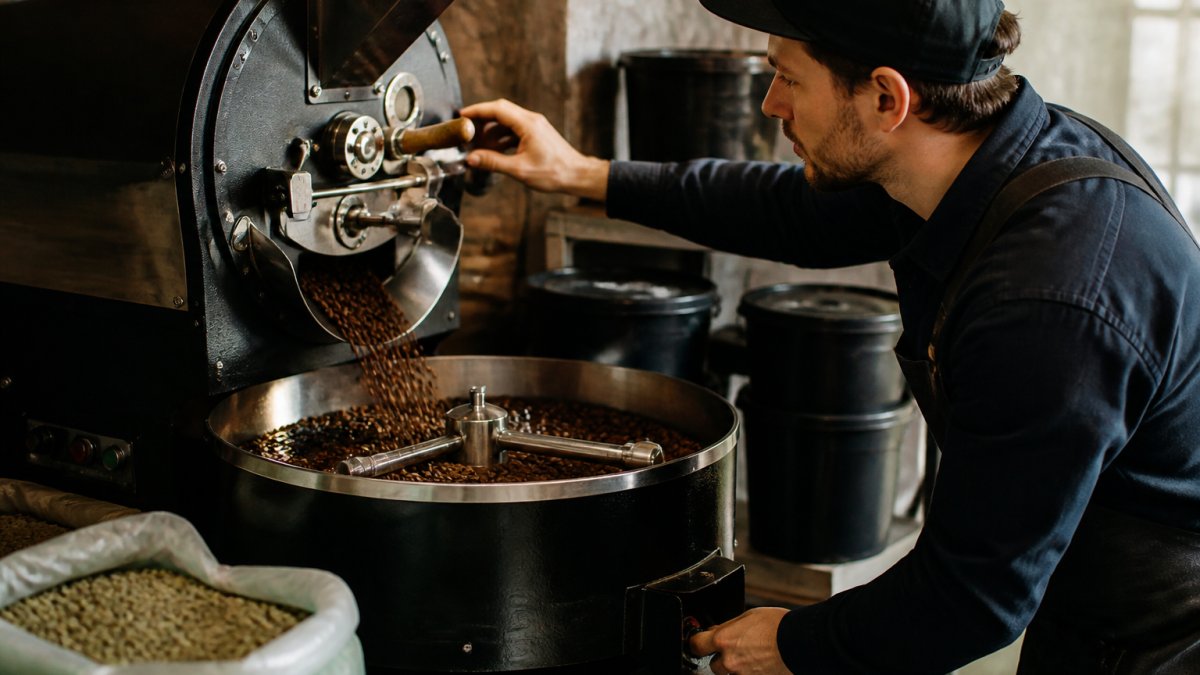
Manual Monitoring and Roast Control
This is where artisanal roasting truly distinguishes itself. An artisan roaster doesn't set a timer and walk away. They're present throughout, listening and watching.
The first crack is audible, a popping sound as beans expand and their outer skin splits. Experienced roasters recognize this moment instantly and use it as a reference point. Some roasts end shortly after first crack (light roasts). Others continue 30-60 seconds past it (medium roasts). Dark roasts push even further, sometimes into a second crack, where the beans split again.
A skilled roaster hears these cracks, observes the color shift in real time, and makes adjustments. If the beans are cracking too fast, they might reduce heat. If they're progressing too slowly, they increase it. They're reading feedback and responding, a feedback loop that a preset automated roast simply cannot replicate.
This manual control is labor-intensive, which is why it's incompatible with high-volume production. It's also why artisanal roasting commands higher prices and delivers more nuanced, intentional flavor profiles.
Coffee Roast Levels Explained: Light, Medium, and Dark
Roast level is the most visible expression of roasting decisions, and it directly shapes flavor.
Light roasts end shortly after first crack, typically at internal bean temperatures around 350-365°F. The beans retain more origin character, the flavors from where they were grown. You'll taste bright acidity, floral notes, and the specific terroir of the coffee.
Medium roasts extend past first crack, reaching 365-385°F. At this level, the roaster has balanced origin flavor with roasted flavor. You get some of the bean's inherent character plus the caramel sweetness and chocolate notes that develop during roasting. Medium roasts are forgiving, they work well for many brewing methods and palates.
Dark roasts push to 385-410°F or beyond, sometimes into second crack. The roasted flavors dominate: chocolate, caramel, sometimes smoky or spicy notes. Origin character takes a backseat. Dark roasts work well for espresso (the higher oil content helps create crema) and for people who prefer bold, less acidic cups.
Single Origin Favorites Sample Pack →
An artisanal roaster chooses roast level intentionally based on the specific beans and the desired outcome. They're not applying a universal "dark roast" recipe. They're making a decision: for this Ethiopian Yirgacheffe, a light roast will shine. For this Brazilian blend, medium makes sense.
Freshly Roasted Coffee Beans: Why Roast Date Matters
This is non-negotiable: coffee tastes best within 2-4 weeks of roasting. After that, the flavors flatten. After a few months, the beans become stale.
The reason is chemistry. Roasting creates volatile compounds, the aromatic molecules that make coffee smell and taste like coffee. These compounds are unstable. They begin oxidizing immediately after roasting, especially if the beans are exposed to oxygen, light, or heat. By the time a bag of coffee has sat in a warehouse for three months, then traveled to a retailer, then sat on a shelf for another month, most of those volatile compounds have degraded.
This is why roast date matters. A bag roasted yesterday tastes fundamentally different from a bag roasted six months ago, even if they're the same beans roasted the same way.
Many commercial roasters don't print roast dates on their bags. It's not an accident. If consumers knew their coffee had been sitting for months, they might question the purchase. Artisanal roasters, by contrast, highlight the roast date because freshness is part of their value proposition.
The roasted-to-order model, where beans are roasted after you place an order, ensures maximum freshness. Your coffee arrives days after roasting, not months.
How to Evaluate Artisanal Coffee Claims
Not every coffee claiming to be "artisanal" actually is. Here's how to separate genuine small-batch roasting from marketing.
Check the roast date. If it's not printed on the bag, ask. A roaster confident in freshness will display it prominently. If the roast date is more than four weeks old, the coffee has already lost significant aromatic complexity.
Ask about roasting method. Genuine artisanal roasters typically use drum roasters (which allow hands-on control) rather than fluid bed roasters (which are more automated). They can describe their roasting approach in detail: their target temperatures, crack timing, cooling method.
Look for green bean sourcing information. Does the roaster know where their beans come from? Can they tell you the farm, region, altitude, and processing method?
Taste for origin character. Single-origin artisanal coffees should taste distinctly different from one another. A light-roasted Ethiopian should taste noticeably different from a light-roasted Colombian.
Check the pricing. Genuinely artisanal coffee costs more than commodity coffee because the roaster is investing time and skill. If a roaster is selling "artisanal" beans at supermarket prices, they're either not actually roasting small-batch, or they're cutting corners somewhere.
At ASE', we publish our roast dates, source our beans from specific regions and growers, and roast to order. Our Single Origin Favorites Sample Pack lets you taste the difference between origins, Brazil Santos with cocoa notes, Colombia with dried orange and berry, Costa Rica with apple and honey, all roasted to bring out those specific characteristics.

The Trade-offs: Consistency, Scale, and Craftsmanship
Artisanal roasting isn't objectively "better" than commercial roasting. It's different, with real trade-offs.
Consistency: A commercial roaster delivers identical cups every time. An artisanal roaster's coffee varies slightly batch to batch. Some people find this variation frustrating. Others find it evidence that they're drinking something real, not a standardized product.
Price: This is the obvious one. Artisanal coffee costs more. You're paying for the roaster's time, skill, and the overhead of small-batch production. A bag of artisanal coffee might cost $18-24, while a commercial equivalent costs $8-12.
Flavor complexity: Artisanal roasting typically delivers more nuanced, complex flavor profiles. Commercial roasting delivers cleaner, simpler flavors that are easier to like immediately. If you're looking for a straightforward cup, commercial might actually be the better choice.
The honest take: artisanal roasting is for people who care about coffee as a craft and are willing to pay for it. If you want affordable, consistent, reliable coffee, commercial roasting serves that purpose well.
Understanding what artisanal coffee roasting actually is, small-batch, carefully monitored, intentionally profiled roasting, helps you make better purchasing decisions. The difference between genuine artisanal roasting and marketing hype comes down to roast dates, sourcing transparency, and flavor complexity.
Frequently Asked Questions
What does artisanal coffee roasting actually mean?
Artisanal coffee roasting is small-batch production where roasters carefully select high-quality green coffee beans and use manual monitoring and customized roast profiles to develop specific flavor characteristics. Unlike mass-produced roasting, artisanal roasters adjust temperature, airflow, and roast time based on each batch's unique properties. The focus is on craftsmanship, precision, and bringing out the coffee's origin-specific flavors and aromas rather than consistency across millions of units.
How does the artisan coffee roasting process differ from commercial roasting?
Artisanal roasters use smaller batches (often 1-5 kg per roast) and adjust roast profiles manually based on visual and auditory cues, while commercial roasters process large volumes with automated, standardized settings. Artisanal roasters prioritize flavor development and bean quality, often sourcing directly from specific growers. Commercial roasting prioritizes speed, uniformity, and cost efficiency. Artisanal batches may vary slightly between roasts; commercial coffee aims for identical taste across every bag.
Why does roast date matter for freshly roasted coffee beans?
Freshly roasted beans ordered to order ensure you receive coffee at its optimal flavor window rather than beans that have sat in warehouses for weeks or months. When you purchase from roasters like ASE' that roast to order, you're guaranteed beans within days of roasting, delivering the bold, balanced cup that artisanal roasting is designed to produce.
How do you evaluate whether coffee is truly artisanal?
Look for roasters who provide roast dates, origin information, and tasting notes specific to each batch. Authentic artisanal roasters share details about grower relationships, processing methods, altitude, and bean variety. They typically roast in small batches and may note slight variations between roasts as a sign of careful attention rather than a defect. Avoid claims of 'artisanal' without supporting information about sourcing or roasting methods. ASE' provides detailed origin profiles for each single-origin coffee, including grower, altitude, and processing method, making it easy to assess quality and craftsmanship.