

How to Tell If Coffee Beans Are Stale: 7 Signs
Table of Contents
-
Seven Reliable Signs Your Coffee Beans Are Stale
- 1. Check the roast date first
- 2. Smell the bag and the beans
- 3. Look at the surface oils
- 4. Check the texture and dryness
- 5. Grind a small scoop and watch the bloom
- 6. Taste for lost brightness and sweetness
- 7. Watch for cardboard, paper, or hollow flavors
- Staleness versus spoilage
- The limits of each clue
- What Do Stale Coffee Beans Taste Like?
- How Long Do Coffee Beans Last? Freshness Timelines
- How to Store Coffee Beans to Keep Them Fresh
- Staleness vs Spoilage: When Coffee Beans Go Bad
- A Simple Freshness Test and Troubleshooting a Flat Cup
- Conclusion: Buy Fresh, Store Smart, Brew Better
- Frequently Asked Questions
Last Updated: October 16, 2026
Seven Reliable Signs Your Coffee Beans Are Stale
Stale coffee beans lose aroma, brightness, and sweetness long before they look different. To know how to tell if coffee beans are stale, start with your nose and your memory of last week's cup, not the date on the bag.
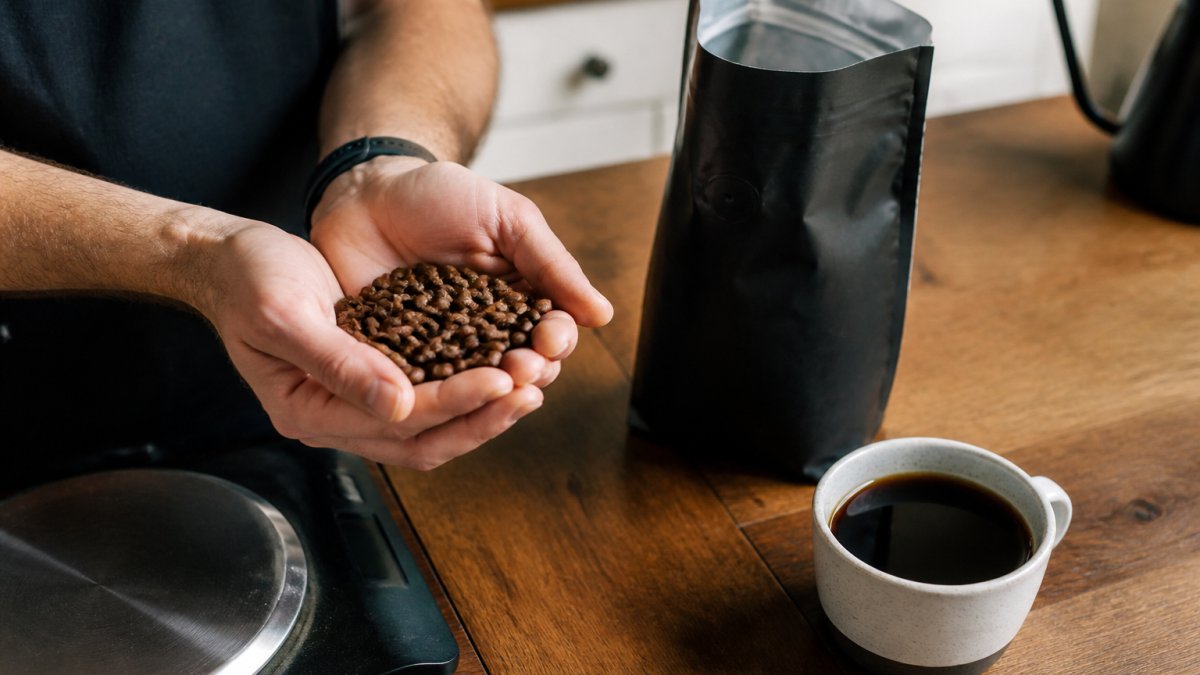
At ASE', we roast to order for this reason: the gap between roasted and stale is shorter than most people think. Here are the seven signs we check, in order.
1. Check the roast date first
The roast date tells you more than any other label. "Best by" dates vary widely by brand; a roast date is a fact.
- Under 2 weeks old: peak flavor, especially for filter brewing
- 2 to 6 weeks old: still good, but brightness starts to fade
- Over 6 weeks old: expect muted notes and a flatter cup
Whole beans hold up far better than ground, since grinding exposes more surface area to oxygen. A sealed bag also protects better than an opened one, so the same roast date can mean two different things depending on storage.
2. Smell the bag and the beans
Fresh beans hit you the moment you open the bag, the clearest single signal you have.
If you have to hunt for the smell, the beans are on their way out. Grind a small scoop: fresh grounds smell sweet, roasty, and alive; stale grounds smell like dusty paper, or nothing.
3. Look at the surface oils
Oily beans are often cited as a sign of staleness, but this clue is unreliable alone. Dark roasts can look oily within days, since roasting brings oils to the surface; light roasts may stay matte for weeks.
What matters is the change from how the beans looked when fresh. A bag that was matte at purchase and is now shiny and slick is a stronger signal than oiliness alone.
4. Check the texture and dryness
Fresh beans feel dense and firm. Stale beans feel lighter, drier, and more brittle after losing moisture and internal gases. If they crumble easily or feel hollow when bitten, freshness is fading.
This is a supporting clue, not a verdict. Some beans are naturally more brittle than others, and roast level affects density.
5. Grind a small scoop and watch the bloom
Hot water poured over freshly ground coffee should bloom: swell, bubble, and release gas. That bloom is CO2 escaping, a direct sign of recent roasting.
Stale grounds bloom weakly or not at all. They may just sit there and sink. This is one of the most visual, repeatable checks you can run, and it takes less than a minute.
6. Taste for lost brightness and sweetness
Stale coffee tastes flat, hollow, and dull. Sweetness drops out first, then brightness, leaving a cup that is technically coffee but has nothing interesting to say.
Brightness and acidity are the lively, fruit-like qualities in a good cup, and they fade fastest. A coffee that tasted of dried orange or berry three weeks ago may taste like plain warm water now.
7. Watch for cardboard, paper, or hollow flavors
The classic stale note is cardboard or wet paper, sometimes a faintly bitter, hollow taste with no sweetness behind it. That bitterness is not a strong dark roast, it is an absence of flavor, not a presence.
If your usual recipe suddenly tastes bland, suspect the beans first, but rule out grind size, water, and recipe too, since a flat cup can come from several places.
Staleness versus spoilage
Stale coffee is not spoiled coffee. Stale beans have lost flavor but are still safe to drink; spoiled beans have actually gone off.
Watch for these spoilage signs:
- Visible mold: fuzzy patches, usually white or green
- A musty, damp, or sour smell: not just weak, but wrong
- Clumping or damp texture: a sign moisture got in
If you see mold, throw the beans out. Do not try to salvage them. For food-safety guidance on mold and moisture, the USDA FoodSafety.gov guidance on mold is a good reference.
The limits of each clue
No single sign is conclusive. A roast date can mislead if the bag was stored badly, oily beans can be perfectly fresh, and a weak aroma can come from a cold nose. Run several checks together, roast date, aroma, appearance, grind bloom, and brewed taste. When two or three point the same way, you have your answer.
What Do Stale Coffee Beans Taste Like?
Stale coffee tastes flat, hollow, and dull. The sweetness drops out first, then the brightness, and what's left is a cup that's technically coffee but has nothing interesting to say.
Single Origin Favorites Sample Pack →
Muted aroma and lost brightness
You may notice the change most in the finish. Fresh coffee lingers. Stale coffee disappears.
Flat, cardboard-like flavors in brewed coffee
If your usual recipe suddenly tastes bland, the beans are the first thing to suspect, not your brewing.
How Long Do Coffee Beans Last? Freshness Timelines
Whole beans stay fresh for about two to four weeks in a sealed bag at room temperature, and longer if frozen. Ground coffee goes stale in days, not weeks.
| Storage Method | Whole Beans | Ground Coffee |
|---|---|---|
| Sealed bag, room temp | 2-4 weeks | 3-7 days |
| Airtight container, room temp | 3-4 weeks | 1-2 weeks |
| Freezer, airtight | 3-6 months | 1-2 months |
How to Store Coffee Beans to Keep Them Fresh
Storage is not about making beans fresher; it is about slowing the loss of what is already there. The four enemies are oxygen, light, heat, and moisture, keep all four away from the beans between roaster and grinder.
What actually works
- Airtight, opaque canister: blocks oxygen and light. A one-way valve helps release CO2 without letting air in, but it is not a substitute for a good seal.
- Cool, dark cupboard: steady temperature, no direct sun, away from the stove and kettle.
- Freezer for long storage: portion into small, airtight bags so you only thaw what you will use in a week or two. Thaw sealed, at room temperature, before grinding.
What does not work
- The fridge: moisture and food odors migrate into the beans. The constant temperature swings and humidity pull moisture in, and the beans pick up whatever else is in there.
- A clear jar on a sunny shelf: light degrades the oils and accelerates staleness.
- A hopper full of beans: every time you open the lid, fresh air replaces the protective CO2 blanket. Fill the hopper for a few days at most.
Qualified freshness timelines
These are practical windows, not hard limits. They assume decent packaging and reasonable storage.
| Storage Method | Whole Beans | Ground Coffee |
|---|---|---|
| Sealed bag, room temp | 2-4 weeks | 3-7 days |
| Opened bag, rolled and clipped | 1-2 weeks | 2-4 days |
| Airtight container, room temp | 3-4 weeks | 1-2 weeks |
| Freezer, airtight | 3-6 months | 1-2 months |
A medium-dark roast like our Honduras tends to show its age a little differently than a lighter Ethiopian, which is why the roast level matters as much as the calendar. Darker roasts often peak earlier and fade faster; lighter roasts can hold brightness longer but may need a longer rest after roasting.
Practical salvage advice
If your beans are past their peak but not spoiled, you do not have to throw them out. You can:
- Use them for cold brew: the long, cold extraction masks some flatness and cardboard notes.
- Blend with fresh beans: a 50/50 mix can stretch a fading bag without ruining every cup.
- Adjust your recipe: a slightly finer grind and a touch more coffee can compensate for lost intensity, though it will not restore lost brightness.
- Save them for baking or rubs: stale coffee still works in recipes where coffee is a background note.
What you cannot do is brew freshness back into stale beans. No grind setting, water temperature, or brewing method restores aromatics that have already oxidized. Storage slows the clock; it does not rewind it.
Staleness vs Spoilage: When Coffee Beans Go Bad
Watch for these spoilage signs:
- Visible mold: fuzzy patches, usually white or green
- A musty, damp, or sour smell: not just weak, but wrong
- Clumping or damp texture: a sign moisture got in
- A sour or off taste: sharp and unpleasant, not merely flat
If you see mold, throw the beans out. Don't try to salvage them. Stale beans, by contrast, are safe, just disappointing. For food-safety guidance on mold and moisture, the USDA FoodSafety.gov guidance on mold is a good reference.
A Simple Freshness Test and Troubleshooting a Flat Cup
Here's a repeatable three-step test for when you're unsure.
The three-step freshness test
- Check the roast date. Over six weeks old? Assume it's fading.
- Grind a small scoop and smell it. Weak, papery, or dusty means stale.
- Brew a small cup and taste for brightness. If the sweetness and finish are gone, the beans are the problem.
Run all three. No single clue is conclusive on its own, which is what most guides get wrong.
What to do when your coffee tastes flat
Flat coffee usually traces back to the beans, but not always. Work through these in order:
- Beans over four weeks old: buy fresher, ideally roasted to order
- Grind too coarse or too fine: adjust and re-taste
- Water too hot or too cold: aim for just off the boil
- Dirty equipment: oils build up in the grinder and brewer
If fresh beans fix the cup, it was staleness. If not, your recipe needs work.
Conclusion: Buy Fresh, Store Smart, Brew Better
The real problem with stale coffee isn't storage, it's buying too much at once.
That's the gap ASE' was built to close. Our Specialty Coffee Association guidance on freshness aligns with what we've always told customers: fresh beans, stored well, brewed with care, is the whole game.
Start with our Single Origin Favorites Sample Pack to find your roast, or go straight to a full bag of Peru for a silky, sweet everyday cup.


Frequently Asked Questions
Are 3 year old coffee beans still good?
Three-year-old coffee beans are not good for drinking. They are well past their peak and will taste flat, dull, and cardboard-like. While they are unlikely to make you sick if they were stored dry and free of mold, the flavor will be disappointing. If you find a bag that old, check for moisture, mold, or a musty smell. Otherwise, compost them and buy fresh coffee beans with a recent roast date for a better cup.
Can stale coffee beans make you sick?
Stale coffee beans alone will not make you sick. Staleness is about lost flavor and aroma, not food safety. However, if beans were stored in a damp environment, they can grow mold or bacteria, which may cause illness. Look for visible mold, a musty or off smell, or clumping. If any of these are present, throw the beans out. For everyday staleness, the worst outcome is a bland cup, not a health risk.
How can you tell if coffee beans have gone stale?
Start with the roast date: if it has been more than four to six weeks since roasting, the beans are likely past their best. Next, smell the beans. Fresh coffee beans have a strong, sweet aroma; stale ones smell muted or like cardboard. Finally, brew a small cup. If the coffee tastes flat, hollow, or lacks brightness and complexity, the beans are stale. Oily beans and a dry, grainy texture can also be signs.
How long do coffee beans stay fresh after roasting?
Whole coffee beans stay fresh for about two to four weeks after the roast date when stored in an airtight container away from light, heat, and moisture. In a sealed bag with a one-way valve, they can last up to six weeks, though flavor peaks earlier. Ground coffee loses freshness much faster, often within a few days. For the best taste, buy whole beans and grind just before brewing.