

Verve Coffee Roasters vs Press Coffee: 2026 Comparison
Table of Contents
- Verve Coffee Roasters vs Press Coffee: How the Two Roasters Differ
- Verve Coffee Roasters review: Bright, Fruit-Forward Roasts
- Press Coffee review: Balanced, Approachable Blends
- Verve Coffee subscription: What You Get and How It Ships
- Coffee subscription cost: Verve, Press, and What You Pay For
- Which Roaster Fits Your Brew Method and Daily Ritual?
- Frequently Asked Questions
Last Updated: October 19, 2026
Verve Coffee Roasters vs Press Coffee: How the Two Roasters Differ
Verve Coffee Roasters and Press Coffee represent two distinct philosophies in specialty coffee, and choosing between them comes down to whether you want brightness or balance in the cup. Verve Coffee Roasters, the Santa Cruz-born roaster with a reputation for fruit-forward light roasts, sits at one end of the spectrum. Press Coffee, the Arizona-based operation known for approachable, consistent blends, sits at the other. This comparison from ASE' breaks down roast profiles, sourcing, pricing, and which roaster suits your daily ritual.
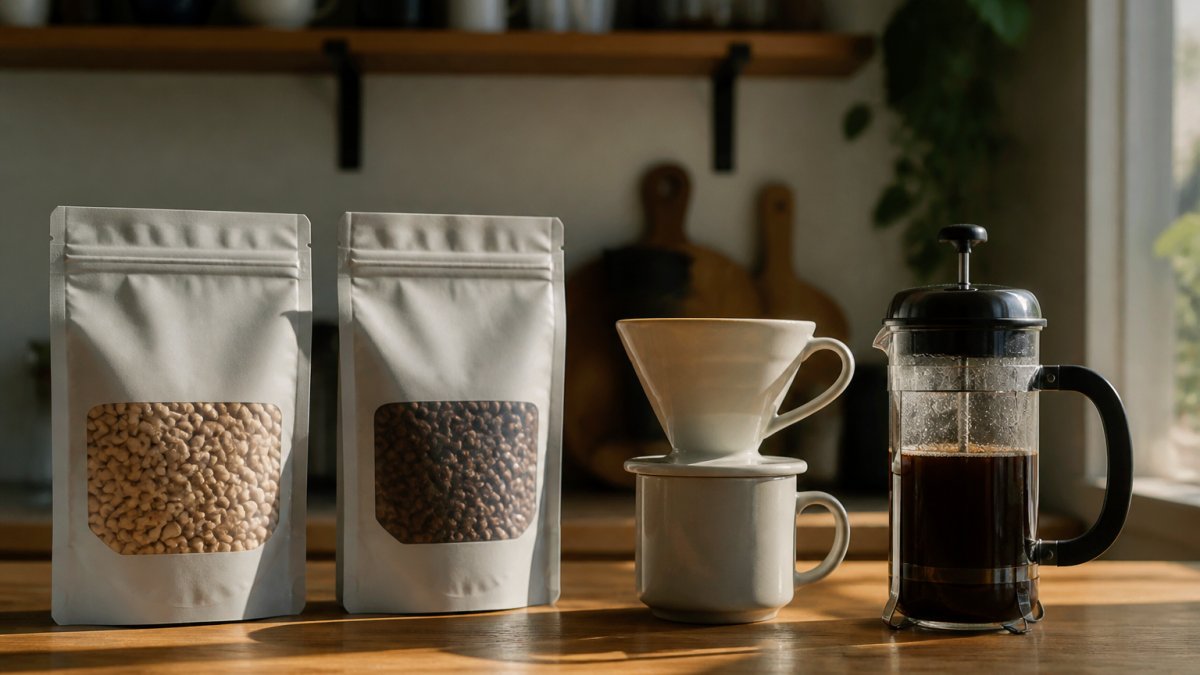
The difference matters more than most buying guides admit. A light roast from a fruit-forward roaster can taste thin and sour in a French press if you're used to a darker, sweeter cup. A balanced medium roast can feel flat in a pour-over if you're chasing complexity.
Roast Profiles and Flavor Signatures
Verve leans light. Their roast profiles push toward clarity, acidity, and pronounced tasting notes, often fruit and floral. Press leans medium, favoring sweetness, body, and a rounded finish that holds up across brew methods.
If you drink black coffee and enjoy tasting the origin, Verve's style rewards you. If you add milk or want a cup that tastes the same every morning, Press is the safer bet. Neither approach is "better." They serve different palates, and the roast level is the single biggest factor separating them.
Sourcing, Sustainability, and Freshness
Both roasters source single-origin coffee and blends, and both publish roast dates on their bags. Freshness is the equalizer here: whole bean coffee stales fastest after roasting, so a roast date within two weeks of arrival matters more than brand loyalty. According to Specialty Coffee Association guidance on freshness, peak flavor sits in the days and weeks after roasting, not months.
Where they diverge is transparency. Verve tends to spotlight producer relationships and farm-level detail on its single-origin releases. Press emphasizes consistency and accessibility. If knowing the farm and the producer matters to you, Verve's packaging and product pages give you more to work with.
Verve Coffee Roasters review: Bright, Fruit-Forward Roasts
A Verve Coffee Roasters review usually lands on the same conclusion: this is a roaster for people who like their coffee lively. Expect light roast profiles with visible acidity, tasting notes that skew toward citrus, berry, and stone fruit, and a body that stays on the lighter, tea-like side. The clarity is the point.
Signature Coffees and Current Product Range
Verve's lineup rotates with the harvest, which is normal for a specialty roaster. You'll typically find single-origin coffee from Ethiopia, Kenya, and Central America alongside year-round blends built for espresso and drip. Whole bean is the default; ground coffee is available but loses freshness faster.
The practical takeaway: check the current range before you commit to a subscription, because single-origin offerings change seasonally. That rotation is a feature if you like variety and a nuisance if you want the same bag every month.
Press Coffee review: Balanced, Approachable Blends
A Press Coffee review reads differently. Press builds its identity on balance: medium roast profiles, sweetness up front, low bitterness, and a body that feels round rather than sharp. It is coffee designed to be easy to like, and that is not a criticism.
Signature Coffees and Current Product Range
Press's strength is its blends, which are formulated for consistency across brews. Their espresso blends pull sweet and chocolatey, and their drip-oriented blends hold up in a batch brewer without turning bitter. Single-origin coffee appears too, but the blends are the draw.
For a household where one person drinks espresso and another drinks drip, a balanced blend from Press is the lower-risk choice. It won't surprise you, and it won't disappoint you either.
Verve Coffee subscription: What You Get and How It Ships
A Verve Coffee subscription delivers recurring shipments of whole bean coffee, with frequency and grind options you set at checkout. Bags ship after roasting, and the roast date on the bag is your freshness checkpoint. Expect the first shipment within days of ordering, then on your chosen cadence.
The value question is straightforward: subscriptions save you from running out, and many roasters offer a modest discount for committing to recurring deliveries. Whether that discount offsets shipping depends on your order size. Ordering two bags at a time usually spreads shipping cost better than a single bag.
Coffee subscription cost: Verve, Press, and What You Pay For
Most comparison articles stop at 'specialty coffee costs more than supermarket coffee.' That's true but useless when you're deciding between two roasters. The practical question is what a bag actually costs per ounce, what shipping adds, and whether a subscription discount changes the math. Here's how to evaluate Verve and Press on those terms without relying on stale list prices.
What drives the price of a bag
Four variables move the number more than brand name:
- Bag size. Twelve-ounce bags are common in specialty coffee, but some roasters ship 10-ounce or 16-ounce formats. Price per ounce is the only fair comparison, and it changes fast when bag sizes differ.
- Origin and processing. A washed single-origin from a small lot costs more than a year-round blend built from larger contracts. Rotating single origins from Verve and Press's blend lineup sit at different points on that curve.
- Roast-to-order vs. shelf inventory. Roasters who roast after you order carry less stale inventory and charge for that freshness. Both Verve and Press publish roast dates, which is the signal to look for.
- Shipping threshold. Many roasters waive shipping above a set order value. Ordering two bags at once usually clears that threshold; a single bag often doesn't.
How to compare Verve and Press on cost
Rather than quote a price that may be outdated by the time you read this, use a repeatable method:
- Open the current product page for a comparable coffee from each roaster, ideally a medium roast blend on both sides, since that's the closest apples-to-apples pairing.
- Note the bag size in ounces and divide the listed price by that number to get price per ounce.
- Check the shipping policy for a single-bag order and a two-bag order. The difference tells you whether bundling is worth it.
- If a subscription is offered, compare the subscriber price to the one-time price and confirm whether the discount applies to every shipment or only the first.
- Check whether the subscription lets you skip, pause, or swap coffees. Flexibility has real value if you travel or drink slowly.
A common pattern among specialty roasters is a modest subscriber discount, often in the range of what you'd save by buying two bags at once, paired with free shipping above a threshold. The exact terms change, so verify them at checkout rather than trusting a comparison table written months ago.
The subscription value question
A subscription saves you from running out, but it only saves money if three things are true: the discount is real, shipping is waived or spread across enough bags, and you actually drink the coffee before it stales. If you brew one cup a day, a single 12-ounce bag lasts roughly two to three weeks depending on dose, so a weekly subscription will outpace your consumption. Match the cadence to your actual brewing volume before you commit.
What you're really paying for
Specialty coffee costs more because of sourcing, smaller batch roasting, and fresher inventory. A bag roasted last week and shipped directly costs more than a bag that sat in a warehouse, and the difference shows up in the cup. At ASE', we roast to order for the same reason: coffee is at its best shortly after roasting.
| Factor | Verve Coffee Roasters | Press Coffee |
|---|---|---|
| Roast focus | Light, fruit-forward | Medium, balanced |
| Best for | Pour-over, black coffee | Espresso, drip, milk drinks |
| Signature strength | Rotating single origins | Consistent blends |
| Freshness signal | Roast date on bag | Roast date on bag |
| Subscription | Recurring, customizable | Recurring, customizable |
| Price check | Divide listed price by bag ounces | Divide listed price by bag ounces |
| Shipping check | Confirm threshold for free shipping | Confirm threshold for free shipping |
Which Roaster Fits Your Brew Method and Daily Ritual?
Match the roaster to your brew method and the decision gets simple. Light roasts reward pour-over and drip, where you can control water temperature and brew ratio to pull out sweetness and clarity. Medium roasts forgive French press and espresso, where body and balance matter more than delicate acidity.
Here's how we'd decide:
- Pour-over, black coffee, chasing flavor notes: Verve's light roasts give you more to taste.
- French press or espresso with milk: Press's medium roasts hold their sweetness and body.
- Household with mixed preferences: a balanced blend from Press pleases more people at once.
- You want variety month to month: a rotating single-origin subscription from Verve.
- You want the same cup every morning: a year-round blend, from either roaster.
Grind size, water temperature, and steeping time decide cup quality as much as the bean does. A great light roast brewed with water that's too cool tastes sour. A medium roast steeped too long turns bitter. Get the brewing variables right and both roasters deliver.
If you're in Grandview, ASE' offers apparel and drinkware for the ritual-minded. Every purchase supports ASA-CORP.org's Tutorsforyou.org educational program, which is a different kind of value than a discount code.
Choosing between two good roasters is a better problem than choosing between two mediocre ones. The real challenge is matching roast profile to brew method and accepting that freshness, not brand name, decides how good your morning cup tastes. ASE' roasts to order so your beans arrive close to their peak, sources carefully selected coffee and tea, and sends a portion of every purchase to ASA-CORP's educational program.
Frequently Asked Questions
What is the difference between Verve Coffee Roasters and Press Coffee?
The biggest difference is roast style. Verve Coffee Roasters leans toward lighter, fruit-forward profiles with pronounced acidity and clarity, which suits pour-over and filter brewing. Press Coffee focuses on balanced, approachable blends with more body and sweetness, which works well for espresso and milk drinks. Both roast whole bean and ground coffee, ship fresh, and offer subscriptions, so the choice usually comes down to whether you prefer a bright cup or a rounder, more chocolatey one.
Which is better, Verve Coffee Roasters or Press Coffee?
Neither is better in absolute terms. If you drink pour-over or drip and enjoy tasting notes like citrus, berry, and stone fruit, Verve Coffee Roasters review coverage usually points to their light roasts as the stronger match. If you pull espresso or add milk, Press Coffee review coverage tends to favor their medium and dark roasts for body and sweetness. Buy a small bag of each, brew them with the same grind size and water temperature, and let your own palate decide.
How do Verve and Press Coffee compare on coffee subscription cost?
Coffee subscription cost for both roasters depends on bag size, roast, and delivery frequency, so check each roaster's site for current pricing. As a rule, single-origin lots cost more than blends, and smaller bags cost more per kilogram. Factor in shipping and how often you brew: a weekly 340g bag is a different budget than a monthly 1kg bag. Compare the per-kilogram price rather than the bag price to see which subscription actually fits your routine.
Do Verve Coffee Roasters and Press Coffee offer subscriptions?
Yes. The Verve Coffee subscription lets you choose roast, grind, and delivery interval, and you can pause or cancel between shipments. Press Coffee runs a similar subscription with recurring deliveries of their blends and single-origin coffee. Both ship whole bean or ground coffee, and both print a roast date on the bag, which matters more than a best-before date for freshness. Order in smaller, more frequent shipments if you drink fewer than two cups a day.